The Stem Cells That Weren't There
Diabetes researchers, investigating how the body supplies itself with insulin, discovered to their surprise that adult stem cells, which they expected to play a crucial role in the process, were nowhere to be found. Many researchers had proposed that adult stem cells develop into insulin-producing cells, called beta cells, in the pancreas.
Instead, the beta cells themselves divide, although slowly, to replenish their own population.
"Ultimately, if diabetes researchers learn how to control insulin production, we can better treat patients who now can't produce insulin--children and adults with type 1 diabetes," said study leader Jake A. Kushner, M.D., a pediatric endocrinologist at The Children's Hospital of Philadelphia. "This research tells us that we need to better understand what regulates the growth of beta cells, rather than searching for adult stem cells that give rise to beta cells."
Dr. Kushner's team reported their findings, based on animal studies, in the May issue of Developmental Cell.
The discovery does not have immediate implications for diabetes treatment. Rather, it advances basic knowledge of insulin biology that could form a foundation for eventual therapies.
Currently, patients with type 1 diabetes depend on life-saving insulin injections or medication. Looking to future techniques, medical researchers hope to fulfill a promise of regenerative medicine: restoring the body's ability to produce its own insulin. One solution is to transplant tissues called the islets of langerhans, small masses within the pancreas containing the beta cells that normally secrete insulin. Islet transplants have already been performed experimentally, but typically fail after a few years in a patient's body.
Moreover, islets are taken from cadavers, and supplies are very limited, so researchers are seeking ways to grow islets in the laboratory. Another potential implication of the research is for beta cell regeneration, a controversial area of diabetes research. Patents with longstanding type 1 diabetes have small amounts of islets that escape destruction by the immune system. With sufficient biological knowledge and the appropriate techniques, it might even be possible to someday stimulate these residual beta cells inside patients to proliferate and produce healthy amounts of insulin.
"We expected to find adult stem cells that differentiate into beta cells," said Kushner. "Such adult stem cells are important in renewing skin, intestines and other tissues." (Adult stem cells are different from the embryonic stem cells found in human embryos that are a current focus of social and political controversies.)
"However," he added, "we found no evidence for adult stem cells that give rise to beta cells or other pancreatic tissue. We found that all beta cells can replicate, and are, in a sense, their own stem cells."
Kushner's group found that beta cells renew themselves and grow slowly. Unexpectedly, the researchers found the beta cells undergo a prolonged waiting period before dividing. This delay, which they call a replication refractory period, had never been observed in mammalian development.
The researchers made use of a novel cell labeling technique that allows them to view the fates of individual cells throughout multiple rounds of cell divisions. "Although the cell labeling technique had been described previously by other groups, our group was the first to use it over long periods of time," said Kushner.
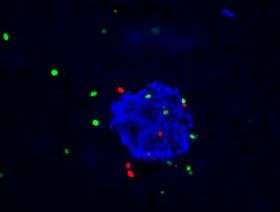
By providing rats with a timed sequence of colored dyes in their drinking water, the researchers were able to see discrete beta cells in the rat pancreas, shining in single colors that indicated a sequence of cell divisions. In contrast, the rapidly dividing cells in the rats' intestine showed blended colors, indicating that they had divided multiple times from specialized cells—possibly from adult stem cells.
"We expect that other developmental biologists can use this cell labeling technique to track the fate of cells in many other tissues, such as brain and muscle," said Kushner, adding that the technique may also be useful in following cells in cancer research.
If these findings open up a new avenue of investigation into how insulin-producing cells develop, diabetes researchers may be a step closer to manipulating the process to benefit patients. "This research also has implications for type 2 diabetes, in which the body fails to produce and respond to insulin," added Kushner. The incidence of type 2 diabetes has been rising dramatically, especially among children and adolescents.
Source: Children's Hospital of Philadelphia


