Researchers reveal first images of brain changes associated with memory
May 16, 2007 Researchers reveal first images of brain changes associated with memory

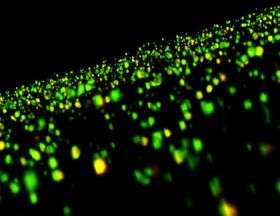
Image of brain cells after LTP. Credit: University of California - Irvine

University of California, Irvine researchers have developed the first images of the physical changes in brain cells thought to underlie memory, a discovery that is already uncovering clues about memory loss linked to cognitive disorders.

Three decades of work by neuroscientists have established that a physiological effect known as long-term potentiation (LTP) encodes everyday forms of memory. In the Journal of Neuroscience today, a UC Irvine research team led by neuroscientists Christine M. Gall and Gary Lynch presents these unique images, which show that the size and shape of synapses that were changed by LTP.

“The way is now open to mapping where in the brain memories are laid down,” said Lynch, a professor of psychiatry and human behavior. “Seeing memory-related physical changes to synapses means that we can at last use mouse models to test if the effects of retardation, aging and various cognitive disorders involve a specific, long-suspected defect in the connections between cortical neurons.”

Brain tissue collected from rats and mice was kept alive in specially constructed equipment. The researchers induced LTP by stimulating synapses with a rhythm known to be critical to memory formation. The brain slices were then sectioned and stained with one antibody that attaches to activated proteins involved with LTP and a second one that labels synapses. Newly developed microscopic methods were used to visualize and measure synapses that had both antibodies attached.

In addition to revealing new information about the formation of memory in the brain, this study and another published last month in the Journal of Neuroscience by the UC Irvine researchers have shown how LTP deficiencies accompany the memory loss seen during the early stages of Huntington’s disease, an incurable neurodegenerative disease characterized by disturbances to memory and learning.

Lynch, Gall and colleagues found that LTP structures encoding memory are defective in mouse models of Huntington’s disease. They discovered that these synaptic defects can be fully reversed through treatment with a brain growth factor released at synapses. Ampakines, a new class of drugs developed by Lynch at UC Irvine that are currently in clinical development for Alzheimer’s disease and ADHD, increase the levels of this growth factor and potentially emerge as therapy for the cognitive problems associated with Huntington’s.

The researchers are now working to see if such LTP defects are present in mouse models of common forms of human mental retardation.

Source: University of California - Irvine


print this article email this article download pdf blog this article bookmark this article     Stumble it Digg this share on Facebook retweet share on Reddit add to delicious
Rate this story - 4.6 /5 (17 votes)


May 16, 2007 all stories

Comments: 0

4.6 /5 (17 votes)
  • Stumble this up

  • Digg this

  • share this

  • hide
  • Related Stories

  • Ouch! Abrupt opioid withdrawal increases pain sensitivity
    created Jul 10, 2009 | popularity not rated yet | comments 0
  • Special protein helps maintain an efficient brain
    created May 18, 2009 | popularity not rated yet | comments 0
  • Neuroscientists discover long-term potentiation in the olfactory bulb
    created May 03, 2009 | popularity not rated yet | comments 0
  • Regions of the brain can rewire themselves
    created Mar 09, 2009 | popularity not rated yet | comments 0
  • How is our left brain is different from our right?
    created Nov 17, 2008 | popularity not rated yet | comments 0


  • hide
  • Relevant PhysicsForums posts

  • Has the H1N1 vaccine been scientifically proven to work?
    created 7 hours ago
  • nesfatin
    created Nov 22, 2009
  • Obsessive Compulsive Disorder
    created Nov 20, 2009
  • West's zone 2 starling resistor respiratory physiology
    created Nov 18, 2009
  • More from Physics Forums - Medical Sciences

Other News

Discovery leads to effective treatment of painful skin condition

Medicine & Health / Diseases

created 39 minutes ago | popularity not rated yet | comments 0

Researchers at Huntsman Cancer Institute, in collaboration with a worldwide group of physicians and scientists, have discovered a remarkable treatment for a rare, yet debilitating, skin condition.


Involving family in medical rounds benefits both family and medical team

Medicine & Health / Health

created 1hour ago | popularity not rated yet | comments 0

Involving family members of pediatric cancer and hematology patients in medical rounds benefits both the family and the medical team, according to a new Indiana University School of Medicine study.


Organizational psychologists use Rock Band to study how people achieve flow while at work

Medicine & Health / Psychology & Psychiatry

created 1hour ago | popularity not rated yet | comments 0

By playing the video game Rock Band for an hour, Kansas State University students were able to help a pair of psychology professors with their research to understand how people can achieve flow while at work or while performing ...


Clinical trials of spray-on skin to start in US

Medicine & Health / Research

created 2 hours ago | popularity 5 / 5 (1) | comments 1

(PhysOrg.com) -- Clinical trials comparing a spray-on skin product with skin grafts will start in the US in December. The trials, which are partly funded by a US army grant of $1.4 million, will last about a year and will ...


High unexpressed anger in MS patients linked to nervous system damage, not disease severity

Medicine & Health / Neuroscience

created 1hour ago | popularity not rated yet | comments 0

People with Multiple Sclerosis (MS) feel more than twice as much withheld anger as the general population and this could have an adverse effect on their relationships and health, according to a study published in the December ...