'Virtual Patient' to simulate real-time organ motions for radiation therapy
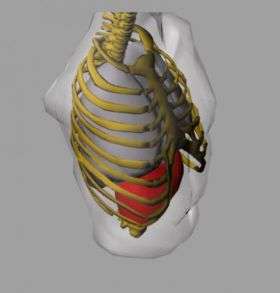
Rensselaer researchers awarded major NIH grant to develop 4-D virtual patient model
With a $2 million grant from the National Institutes of Health (NIH), researchers from Rensselaer Polytechnic Institute are developing a physics-based virtual model that can simulate a patient's breathing in real time. When used in conjunction with existing 3-D models, adding the fourth dimension of time could significantly improve the accuracy and effectiveness of radiation treatment for lung and liver cancers.
X. George Xu, professor of nuclear and biomedical engineering, and Suvranu De, associate professor of mechanical engineering, have formed a multidisciplinary collaboration with clinical colleagues at the Cancer Therapy & Research Center in San Antonio, Texas, to develop the 4-D Visible Photographic Man (VIP-Man). This virtual model is an extension of Xu's ongoing project involving the 3-D VIP-Man, which is an advanced computer model that simulates in 3-D how radiation affects the organs and tissues in the human body.
"Live patients are not static beings, and a moving organ such as the lung or heart is a main concern in radiation treatment or imaging of tumors that are affected by such organ movement," Xu said. "In order to determine accurate and effective radiation dosages, doctors must consider such issues as the breathing function and air volume change that are affected by several physiological factors over the course of the radiation treatment."
Real-time simulations could allow doctors to spot the small fractions of time when the lungs, liver, kidneys, and eventually the heart, are stationary relative to the external radiation beams. These opportune moments during the actual therapy mean that doctors will have more confidence delivering the radiation to a moving tumor.
"The 4-D VIP-Man will allow doctors and medical physicists to accurately predict and monitor these anatomical changes to provide the most effective treatment possible at any given time," Xu said.
The fourth dimension of the VIP-Man is not easily achieved, according to Xu. Currently Xu and De are focusing their energy on respiratory function. "Using advanced computational tools, it is possible to simulate lung movement; however, not in real time," De said. "For effective radiation therapy, physics-based real-time performance offers the ultimate solution."
The key challenge in this project is to develop the algorithms that will make the virtual lungs and adjacent tissues move in real time according to realistic tissue biomechanical properties, De said.
Xu expects that the physics-based 4-D VIP-Man will eventually be used as an even more general anatomical modeling tool for the biomedical community to help patients with respiratory and cardiac diseases. At the same time, Xu will continue to work on the 3-D VIP-Man to create a "family" of virtual patients, ranging in ages and sizes, in collaboration with researchers worldwide through the Consortium of Computational Human Phantoms (http://www.virtualphantoms.org), co-founded by Xu.
The collaboration with the group in Texas came about when Xu's former student, Chengyu Shi, a clinical medical physicist, and Martin Fuss, a radiation oncologist, expressed their interests to develop better radiation treatment by accounting for lung movement. Xu contacted De, who had been using the 3-D VIP-Man to simulate tissue deformation for surgical procedures, and the idea to take 3-D VIP-Man into the fourth dimension was born.
Xu has been working on the 3-D VIP-Man since 1997 using the original Visible Human Project dataset provided by the National Library of Medicine, also funded by several grants from NIH as well as a National Science Foundation CAREER grant. The new four-year, $2 million grant is funded by the National Library of Medicine, which is part of NIH.
Source: Rensselaer Polytechnic Institute


