Scientists discover 5 new species of sea slugs from the Tropical Eastern Pacific
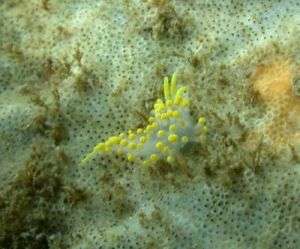
The Tropical Eastern Pacific, a discrete biogeographic region that has an extremely high rate of endemism among its marine organisms, continues to yield a wealth of never-before-described marine animals to visiting scientists at the Smithsonian Tropical Research Institute in Panama. Alicia Hermosillo, researcher at the Universidad de Guadalajara in Mexico, and Angel Valdes, assistant curator of Malacology at the Natural History Museum of Los Angeles County, describe five newly discovered species of nudibranchs, two of which Hermosillo collected in Panama, in Volume 22 of the American Malacological Bulletin.
Nudibranchs—a group of mollusks lacking outer shells—have developed sophisticated chemical defense mechanisms, which is particularly important because promising industrial and medicinal products have been isolated from known species. New species may provide cures for diseases that are currently untreatable.
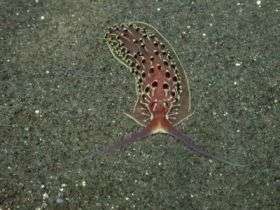
Working from the Smithsonian Tropical Research Institute’s Research Vessel, the Urraca, in Panama’s Gulf of Chiriqui and from the M/V Destiny in Mexico, Hermosillo and other scientists collected sea slugs, aeolid nudibranchs in scientific parlance, between 2001 and 2005. Funding for the research was provided by private donors Roberto Chavez, Steve Drogin and Buceo Vallartech, a dive shop in Puerto Vallarta. and by STRI staff scientist D. Ross Robertson.
It took Hermosillo and her collaborators two more years to identify the animals in the new collection by comparing them to existing collections, consulting specialists and using a scanning electron microscope to examine the jaws and other hard parts of the nudibranchs that distinguish species.
This was part of the formal project “Phylogenetic Systematics of Nudibranchia,” sponsored by a National Science Foundation grant to Terrence M. Gosliner, senior curator for Invertebrate Zoology and Geology at the California Academy of Sciences and to Valdes. The microscope work also was supported by the NSF through a grant to Valdes and collaborators.
A list of the new species (and one still to be classified) that are completely described in the publication follows:
-- Cerberilla chavezi sp. was collected from the Bahia de Santiago, Colima in Mexico and is named for Roberto Chavez, who provided assistance during fieldwork and suggested dive sites.
-- Cuthona destinyae came out of hull scrapings from the M/V Destiny in La Gordornia, Guerrero, Mexico, and thus, is named for the boat.
-- Cuthona millenae, named for Sandra Millen for her knowledge of Pacific nudibranchs, was collected from under a rock at 19m depth in the Bahia de Banderas, Jalisco-Nayarit, Mexico.
-- Cuthona behrensi, a beautiful white specimen with white-tipped rhinophores named for nudibranch specialist Dave Behrens, who supported the research effort, was found by Alicia Hermosillo under a rock at 13m depth at Los Frailes, Golfo de Chiriqui, Panama.
-- Eubranchus yolandae was collected from Los Arcos, Bahia de Banderas, Jalisco-Nayarit, Mexico, from a rock wall at a depth of 17m. This species was named for Yolanda Camacho-Garcia for her contributions to the knowledge of Pacific opistohbranchs.
-- Herviella sp., was photographed and collected by Alicia Hermosillo from a floating buoy southeast of Isla Coiba, Coiba National Park, Panama. The new species status and naming of this animal awaits the discovery of additional specimens.
Source: Smithsonian Tropical Research Institute


