Scientists connect climate change, origins of agriculture in Mexico
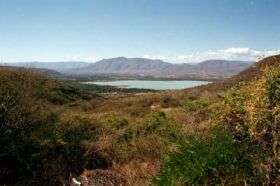
New charcoal and plant microfossil evidence from Mexico’s Central Balsas valley links a pivotal cultural shift, crop domestication in the New World, to local and regional environmental history. Agriculture in the Balsas valley originated and diversified during the warm, wet, postglacial period following the much cooler and drier climate in the final phases of the last ice age. A significant dry period appears to have occurred at the same time as the major dry episode associated with the collapse of Mayan civilization, Smithsonian researchers and colleagues report in the Proceedings of the National Academy of Sciences online.
“Our climate and vegetation studies reveal the ecological settings in which people domesticated plants in southwestern Mexico. They also emphasize the long-term effects of agriculture on the environment,” said Dolores Piperno, curator of archaeobotany and South American archaeology at the Smithsonian’s National Museum of Natural History and the Smithsonian Tropical Research Institute in Panama.
Piperno’s co-authors include Enrique Moreno and Irene Holst, research assistants at STRI; Jose Iriarte, lecturer in archaeology at the University of Exeter in England; Matthew Lachinet, assistant professor at the University of Nevada in Las Vegas; John Jones, assistant professor at Washington State University; Anthony Ranere, professor at Temple University; and Ron Castanzo, research collaborator at the National Museum of Natural History.
Pollen of Podocarpus, a conifer now found primarily at higher elevations, is common in the oldest strata of sediment cores taken from lakes and a swamp in the central Balsas watershed. Along with pollen from grasses and other dryland plants, the Podocarpus indicates the environment encountered by humans at the end of the last ice age (14,000-10,000 B.P.) was drier and 4 or 5 degrees Centigrade cooler than it is today.
The Balsas valley is one of the most likely sites for the domestication of corn (Zea mays) from its wild ancestor, teosinte (Zea mays ssp. parviglumis) because populations of modern teosinte from that region are genetically closest to maize. As the lakes formed beginning around 10,000 B.P., they became magnets for human populations who exploited the fertile soils and rich aquatic resources the lakes contained. The researchers found prehistoric pottery sherds and other artifacts in sediments at the edges of the lakes. At one lake, phytolith data shows that maize and squash were probably planted at the fertile edges by 8000 B.P. Pollen from teosinte is indistinguishable from that of maize, but Zea pollen is consistently present in the cores since the end of the last ice age.
Pollen and phytoliths from weeds associated with crop plants become plentiful in the cores at roughly 6300 B.P Charcoal associated with agricultural burning practices also is abundant at that time. Between 1800 B.P. and 900 B.P., a major drying event occurred, corresponding to the time when a drought occurred in the region of the Classic Mayan civilization. This evidence shows that even during the Holocene, severe, short-term climatic oscillations occurred that may have had considerable importance for social change.
“We continue to find that tropical forests played a much more important role in the origin of agriculture in the New World than was once thought,” Piperno said.
Source: Smithsonian Tropical Research Institute


