Cancer drug pollution is a growing global concern
As incidence of cancer increases globally, the use of cancer drugs is also growing at a rate of approximately 10 percent per year in developed countries.

As incidence of cancer increases globally, the use of cancer drugs is also growing at a rate of approximately 10 percent per year in developed countries.
Environment
13 hours ago
0
8

The UK government has released new plans for relationships, sex and health education (RSHE) in primary and secondary schools in England. This would see age parameters introduced for key issues in sex education, with no education ...
Social Sciences
14 hours ago
0
1

The summer of 2023 was the warmest in the non-tropical areas of the northern hemisphere for 2,000 years, a new study has shown.
Environment
16 hours ago
0
20

Scientists once thought of dinosaurs as sluggish, cold-blooded creatures. Then research suggested that some could control their body temperature, but when and how that shift came about remained a mystery.
Evolution
18 hours ago
0
26

Australia's unprecedented Black Summer bushfires in 2019–20 created ideal conditions for misinformation to spread, from the insidious to the absurd.
Plants & Animals
19 hours ago
0
1

Scientists have discovered a long-buried branch of the Nile river that once flowed alongside more than 30 pyramids in Egypt, potentially solving the mystery of how ancient Egyptians transported the massive stone blocks to ...
Archaeology
19 hours ago
0
17

The way we make decisions in a social context can be explained by psychological, social, and political factors. But what if other forces were at work? Hilke Plassmann and her colleagues from the Paris Brain Institute and ...
Cell & Microbiology
19 hours ago
1
84

This week, we reported on the birth throes of black holes, the questionable assertions of a study about vegan dogs and a technique for observing entanglement without breaking quantum coherence.
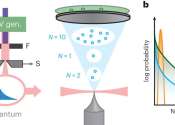
Strong field quantum optics is a rapidly emerging research topic, which merges elements of non-linear photoemission rooted in strong field physics with the well-established realm of quantum optics. While the distribution ...

Researchers have discovered hundreds of historical accounts of humans hunting prey by chasing them down over long distances, which some believe is why we evolved our unique talent for endurance running.
Plants & Animals
21 hours ago
0
27
