First report of wound treatment by a wild animal using a pain-relieving plant
Even though there is evidence of certain self-medication behaviors in animals, so far it has never been known that animals treat their wounds with healing plants.

Even though there is evidence of certain self-medication behaviors in animals, so far it has never been known that animals treat their wounds with healing plants.
Plants & Animals
May 2, 2024
1
379

When two animals look the same, eat the same, behave the same way, and live in similar environments, one might expect that they belong to the same species.
Cell & Microbiology
Apr 26, 2024
0
192
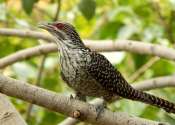
Every cuckoo is an adopted child—raised by foster parents, into whose nest the cuckoo mother smuggled her egg. The cuckoo mother is aided in this subterfuge by her resemblance to a bird of prey. There are two variants of ...
Plants & Animals
Apr 24, 2024
0
130

New research supported by the Wu Tsai Neurosciences Institute's Interdisciplinary Postdoctoral Scholars program zeroes in on the surprising observation that many genes found in brain cells and synapses—the points of communication ...
Evolution
Mar 26, 2024
0
102

Why are fossils of duckbill dinosaurs, a North American family, found in North Africa?
Paleontology & Fossils
Mar 22, 2024
0
79

The sea lamprey, a 500-million-year-old animal with a sharp-toothed suction cup for a mouth, is the thing of nightmares. A new study from the Stowers Institute for Medical Research discovered that the hindbrain—the part ...
Evolution
Feb 21, 2024
0
21

A multi-institutional, international team of evolutionary biologists, genetics specialists and phylogenomicists has found evidence that bird species began diversifying long before the dinosaurs went extinct.

The diet of early anthropoids—the ancestors of apes and monkeys—has long been debated. Did these early primates display behaviors and diets similar to modern species, or did they have much humbler beginnings?
Paleontology & Fossils
Feb 5, 2024
0
13

Using novel comparative riverscape genomics, biologists at the University of Arkansas surveyed 31 fish species from 75 locations in the White River Basin in Arkansas. Their study revealed a complex network of relations and ...
Ecology
Jan 5, 2024
0
1

How did insect wings originate? This is a question that represents an unsolved mystery of insect evolution. Despite many years of research, it is still not entirely clear from which body structure insect wings actually evolved ...
Evolution
Jan 4, 2024
0
299
An ancestor is a parent or (recursively) the parent of an ancestor (i.e., a grandparent, great-grandparent, great-great-grandparent, and so forth).
Two individuals have a genetic relationship if one is the ancestor of the other, or if they share a common ancestor. In evolutionary theory, species which share an evolutionary ancestor are said to be of common descent. However, this concept of ancestry does not apply to some bacteria and other organisms capable of horizontal gene transfer.
Assuming that all of an individual's ancestors are otherwise unrelated to each other, that individual has 2n ancestors in the nth generation before him and a total of about 2g+1 ancestors in the g generations before him. In practice, however, it is clear that the vast majority of ancestors of humans (and indeed any other species) are multiply related (see Pedigree collapse). Consider n = 40: the human species is surely more than 40 generations old, yet the number 240, approximately 1012 or one trillion, dwarfs the number of humans that have ever lived.
Ignoring the possibility of other inter-relationships (even distant ones) among ancestors, an individual has a total of 2046 ancestors up to the 10th generation, 1024 of which are 10th generation ancestors. With the same assumption, any given person has over a billion 30th generation ancestors (who lived roughly 1000 years ago) and this theoretical number increases past the estimated total population of the world in around AD 1000. (All of these ancestors will have contributed to one's autosomal DNA is concerned: this excludes Y-chromosomal DNA and mitochondrial DNA.)
Some cultures confer reverence to ancestors, both living and dead; in contrast, some more youth-oriented cultural contexts display less veneration of elders. In other cultural contexts, some people seek providence from their deceased ancestors; this practice is sometimes known as ancestor worship or, more accurately, ancestor veneration.
This text uses material from Wikipedia, licensed under CC BY-SA
