Frontpage » Tag » cancer

News tagged with cancer

Three 'targeted' cancer drugs raise risk of fatal side effects

Treatment with three relatively new "targeted" cancer drugs has been linked to a slightly elevated chance of fatal side effects, according to a new analysis led by scientists at Dana-Farber Cancer Institute. They added that ...

Medicine & Health / Cancer

created 12 hours ago | popularity 5 / 5 (1) | comments 0 | with audio podcast

Study identifies new prostate cancer drug target

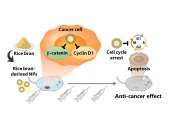
Research led by Wanguo Liu, PhD, Associate Professor of Genetics at LSU Health Sciences Center New Orleans, has identified a new protein critical to the development and growth of prostate cancer. The findings are published ...

Medicine & Health / Cancer

created 13 hours ago | popularity 5 / 5 (1) | comments 0 | with audio podcast

New study makes key finding in stem cell self-renewal

A University of Minnesota-led research team has proposed a mechanism for the control of whether embryonic stem cells continue to proliferate and stay stem cells, or differentiate into adult cells like brain, liver or skin.

Biology / Cell & Microbiology

created 15 hours ago | popularity 4.7 / 5 (3) | comments 0 | with audio podcast

Drugs targeting chromosomal instability may fight a particular breast cancer subtype

Another layer in breast cancer genetics has been peeled back. A team of researchers at Jefferson's Kimmel Cancer Center (KCC) led by Richard G. Pestell, M.D., PhD., FACP, Director of the KCC and Chair of the Department of ...

Medicine & Health / Cancer

created 16 hours ago | popularity 5 / 5 (1) | comments 0 | with audio podcast

Women born to older mothers have a higher risk of developing breast cancer

A new study analyses the influence that certain birth and infancy characteristics have on mammographic density – an important indicator of breast cancer risk. The results reveal that women born to mothers aged over 39 ...

Medicine & Health / Cancer

created 17 hours ago | popularity 5 / 5 (2) | comments 0

Zinc control could be path to breast cancer treatment

The body's control mechanisms for delivering zinc to cells could be key to improving treatment for some types of aggressive breast cancer.

Medicine & Health / Cancer

created 17 hours ago | popularity 5 / 5 (1) | comments 0 | with audio podcast

US girl, 9, gets six-organ transplant

A nine-year-old girl is making what doctors described as a remarkable recovery Sunday, days after surgeons transplanted six of her organs in a groundbreaking medical procedure.

Medicine & Health / Other

created Feb 05, 2012 | popularity 5 / 5 (1) | comments 3

Regular use of vitamin and mineral supplements could reduce the risk of colon cancer: study

Could the use of vitamin and mineral supplements in a regular diet help to reduce the risk of colon cancer and protect against carcinogens? A study published in the Canadian Journal of Physiology and Pharmacology (CJPP) found that ra ...

Medicine & Health / Cancer

created Feb 03, 2012 | popularity 4.5 / 5 (4) | comments 0

World Cancer Day points to prevention

Health care organizations from around the globe will come together on Saturday, Feb. 4 to promote cancer prevention as part of this year's World Cancer Day.

Medicine & Health / Cancer

created Feb 03, 2012 | popularity 5 / 5 (1) | comments 0

US recommends routine HPV vaccination for boys

US health authorities on Friday urged all boys age 11-12 to get a routine vaccination against the most common sexually transmitted disease, human papillomavirus, or HPV.

Medicine & Health / Health

created Feb 03, 2012 | popularity 5 / 5 (1) | comments 0

Soy isoflavone supplements did not provide breast cancer protections

Soy isoflavone supplements did not decrease breast cancer cell proliferation in a randomized clinical trial, according to a study published in Cancer Prevention Research, a journal of the American Association for Cancer Resear ...

Medicine & Health / Cancer

created Feb 03, 2012 | popularity not rated yet | comments 0 | with audio podcast

New technology to tackle treatment-resistant cancers

Free-flowing cancer cells have been mapped with unprecedented accuracy in the bloodstream of patients with prostate, breast and pancreatic cancer, using a brand new approach, in an attempt to assess and control the disease ...

Medicine & Health / Cancer

created Feb 03, 2012 | popularity 5 / 5 (5) | comments 2 | with audio podcast

Lifestyle changes can help prevent 30% of cancers: WHO

More than 30 percent of cancers can be prevented by lifestyle changes, the World Health Organization said Friday, on the eve of World Cancer Day.

Medicine & Health / Cancer

created Feb 03, 2012 | popularity 5 / 5 (2) | comments 0

Study explores possible 'safe and effective' anti-cancer therapy

(Medical Xpress) -- New findings discovered by an international research team, which includes a professor from Western University, may lead to a safe and effective anti-cancer therapy.    A report published online toda ...

Medicine & Health / Cancer

created Feb 03, 2012 | popularity 5 / 5 (1) | comments 0

Targeting tumors may help stop spread of breast, other cancers

(Medical Xpress) -- Cancer that has spread from the site of an original tumor to other places in the body is often viewed as a death sentence. But if there are just a few of those secondary tumors, called metastases, some ...

Medicine & Health / Cancer

created Feb 03, 2012 | popularity not rated yet | comments 0

Cancer

Cancer (medical term: malignant neoplasm) is a class of diseases in which a group of cells display uncontrolled growth (division beyond the normal limits), invasion (intrusion on and destruction of adjacent tissues), and sometimes metastasis (spread to other locations in the body via lymph or blood). These three malignant properties of cancers differentiate them from benign tumors, which are self-limited, and do not invade or metastasize. Most cancers form a tumor but some, like leukemia, do not. The branch of medicine concerned with the study, diagnosis, treatment, and prevention of cancer is oncology.

Cancer may affect people at all ages, even fetuses, but the risk for most varieties increases with age. Cancer causes about 13% of all human deaths. According to the American Cancer Society, 7.6 million people died from cancer in the world during 2007. Cancers can affect all animals.

Nearly all cancers are caused by abnormalities in the genetic material of the transformed cells. These abnormalities may be due to the effects of carcinogens, such as tobacco smoke, radiation, chemicals, or infectious agents. Other cancer-promoting genetic abnormalities may be randomly acquired through errors in DNA replication, or are inherited, and thus present in all cells from birth. The heritability of cancers are usually affected by complex interactions between carcinogens and the host's genome. New aspects of the genetics of cancer pathogenesis, such as DNA methylation, and microRNAs are increasingly recognized as important.

Genetic abnormalities found in cancer typically affect two general classes of genes. Cancer-promoting oncogenes are typically activated in cancer cells, giving those cells new properties, such as hyperactive growth and division, protection against programmed cell death, loss of respect for normal tissue boundaries, and the ability to become established in diverse tissue environments. Tumor suppressor genes are then inactivated in cancer cells, resulting in the loss of normal functions in those cells, such as accurate DNA replication, control over the cell cycle, orientation and adhesion within tissues, and interaction with protective cells of the immune system.

Diagnosis usually requires the histologic examination of a tissue biopsy specimen by a pathologist, although the initial indication of malignancy can be symptoms or radiographic imaging abnormalities. Most cancers can be treated and some cured, depending on the specific type, location, and stage. Once diagnosed, cancer is usually treated with a combination of surgery, chemotherapy and radiotherapy. As research develops, treatments are becoming more specific for different varieties of cancer. There has been significant progress in the development of targeted therapy drugs that act specifically on detectable molecular abnormalities in certain tumors, and which minimize damage to normal cells. The prognosis of cancer patients is most influenced by the type of cancer, as well as the stage, or extent of the disease. In addition, histologic grading and the presence of specific molecular markers can also be useful in establishing prognosis, as well as in determining individual treatments.

For more information about Cancer, read the full article at Wikipedia.
This text uses material from Wikipedia and is available under the GNU Free Documentation License.