World's chocolate supply threatened by devastating virus
A rapidly spreading virus threatens the health of the cacao tree and the dried seeds from which chocolate is made, jeopardizing the global supply of the world's most popular treat.
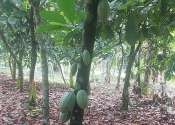
A rapidly spreading virus threatens the health of the cacao tree and the dried seeds from which chocolate is made, jeopardizing the global supply of the world's most popular treat.
Molecular & Computational biology
Apr 23, 2024
0
140

Since the start of this year, the price for cocoa traded on the futures exchange has doubled, climbing from US$4,275 a ton to US$9,481 after earlier hitting an all-time high of US$10,274.
Economics & Business
Apr 4, 2024
0
7

With supermarket aisles piled high with assortments of chocolate treats, the choice can seem overwhelming. The array of ethical options—some with certifications, others with marketing claims about sustainability—can just ...
Other
Mar 26, 2024
0
1

Australians enjoy chocolate, consuming on average the equivalent of 32 kilograms a year, but there is growing interest in its origins and how it's made.
Social Sciences
Mar 20, 2024
0
14

"Natural" foods are trendy, and proponents claim that little or no processing helps preserve the food's inherent flavor. Research now published in the Journal of Agricultural and Food Chemistry shows that, at least for certain ...
Biochemistry
Jun 27, 2023
0
35

Chocolate sales have boomed in recent months. As the cost-of-living crisis bites, consumers are increasingly reaching for chocolate as a simple and affordable pleasure.
Environment
May 23, 2023
0
87

A Rutgers scientist has developed a formulation of low-fat chocolate that can be printed on a 3D printer in pretty much any shape a person can conceive, including a heart.
Other
Feb 14, 2023
0
48

Whether it is enjoyed as creamy milk chocolate truffles, baked in a devilishly dark chocolate cake or even poured as hot cocoa, Americans on average consume almost 20 pounds (9 kilograms) of chocolate in a year. People have ...
Analytical Chemistry
Feb 7, 2023
0
4

Scientists have decoded the physical process that takes place in the mouth when a piece of chocolate is eaten, as it changes from a solid into a smooth emulsion that many people find totally irresistible.
Analytical Chemistry
Jan 12, 2023
0
176

Advent calendars with hidden chocolatey treats, huge tins of Quality Street and steaming cups of hot chocolate festooned with whipped cream and marshmallows are all much-loved wintry staples at Christmastime. But how many ...
Archaeology
Dec 22, 2022
0
18
Chocolate (pronounced /ˈtʃɒklət/ (help·info) or /-ˈələt/) comprises a number of raw and processed foods produced from the seed of the tropical cacao tree. Cacao has been cultivated for at least three millennia in Mexico, Central and South America, with its earliest documented use around 1100 BC. The majority of the Mesoamerican peoples made chocolate beverages, including the Aztecs and the Maya, who made it into a beverage known as xocolātl, a Nahuatl word meaning "bitter water". The seeds of the cacao tree have an intense bitter taste, and must be fermented to develop the flavor.
After fermentation, the beans are dried, cleaned, and roasted, and the shell is removed to produce cacao nibs. The nibs are then ground and liquified, resulting in pure chocolate in fluid form: chocolate liquor. The liquor can be further processed into two components: cocoa solids and cocoa butter. Pure, unsweetened chocolate contains primarily cocoa solids and cocoa butter in varying proportions. Much of the chocolate consumed today is in the form of sweet chocolate, combining chocolate with sugar. Milk chocolate is sweet chocolate that additionally contains milk powder or condensed milk. "White chocolate" contains cocoa butter, sugar, and milk but no cocoa solids (and thus does not qualify to be considered true chocolate).
Chocolate contains alkaloids such as theobromine and phenethylamine, which have physiological effects on the body. It has been linked to serotonin levels in the brain. Scientists claim that chocolate, eaten in moderation, can lower blood pressure. Dark chocolate has recently been promoted for its health benefits, including a substantial amount of antioxidants that reduce the formation of free radicals, though the presence of theobromine renders it toxic to some animals, such as dogs and cats.
Chocolate has become one of the most popular flavors in the world. Gifts of chocolate molded into different shapes have become traditional on certain holidays: chocolate bunnies and eggs are popular on Easter, chocolate coins on Hanukkah, Santa Claus and other holiday symbols on Christmas, and hearts on Valentine's Day. Chocolate is also used in cold and hot beverages, to produce chocolate milk and hot chocolate.
This text uses material from Wikipedia, licensed under CC BY-SA
