Related topics: lung
Cystic fibrosis
hideCystic fibrosis (also known as CF, mucovoidosis, or mucoviscidosis) is a genetic disorder known to be an inherited disease of the secretory glands, including the glands that make mucus and sweat.
The hallmarks of cystic fibrosis are salty tasting skin, normal appetite but poor growth and poor weight gain, excess mucus production, and coughing/shortness of breath. Males can be infertile due to the condition Congenital absence of the vas deferens. Often, symptoms of CF appear in infancy and childhood. Meconium ileus is a typical finding in newborn babies with CF.
Although technically a rare disease, cystic fibrosis is ranked as one of the most widespread life-shortening genetic diseases. It is most common among nations in the Western world; one in twenty-two people of Mediterranean descent is a carrier of one gene for CF, making it the most common genetic disease in these populations.[citation needed] An exception is Finland, where only one in 80 people carry a CF mutation. In the United States, 1 in 4,000 children are born with CF. In 1997, about 1 in 3,300 caucasian children in the United States was born with cystic fibrosis. In contrast, only 1 in 15,000 African American children suffered from cystic fibrosis, and in Asian Americans the rate was even lower at 1 in 32,000.
For more information about Cystic fibrosis, read the full article at
Wikipedia.
This text uses material from Wikipedia and is available under the GNU Free Documentation License.
News tagged with cystic fibrosis
Adapting to clogged airways makes common pathogen resist powerful antibiotics
Feb 09, 2010 |
3 / 5 (1) |
0
|
(PhysOrg.com) -- Certain bacteria cause chronic lung infections in people with cystic fibrosis. Surviving in this oxygen-poor, nitrate-rich environment makes the bacteria less susceptible to antibiotics.
Research points to potential treatment for kidney disease
Jan 25, 2010 |
not rated yet |
0
Research performed at UC Santa Barbara points to the drug rapamycin as a potential treatment for kidney disease. The study builds on past research and shows that studies performed on mice are more likely to ...
Biophysicists manipulate 'zipper,' reveal protein folding dynamics
Jan 19, 2010 |
4.7 / 5 (3) |
0
Biophysicists at the Technische Universitaet Muenchen (TUM), Germany, have published the results of single-molecule experiments that bring a higher-resolution tool to the study of protein folding. How proteins arrive at the ...
A single atom controls motility required for bacterial infection
Jan 04, 2010 |
4.9 / 5 (10) |
0
|
Bacteria can swim, propelling themselves through fluids using a whip-like extension called a flaggella. They can also walk, strolling along solid surfaces using little fibrous legs called pili. It is this ...
A trip to the candy store might help ward off rare, but deadly infections
Jan 04, 2010 |
5 / 5 (1) |
0
As it turns out, children were not the only ones with visions of sugar plums dancing in their heads over this past holiday season. In a new research report published in the January 2010 issue of the Journal of Leukocyte Bi ...
Biodegradable particles can bypass mucus, release drugs over time
Nanotechnology / Nanomaterials
Jan 04, 2010 |
5 / 5 (3) |
0
|
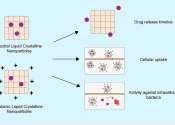
Johns Hopkins University researchers have created biodegradable nanosized particles that can easily slip through the body's sticky and viscous mucus secretions to deliver a sustained-release medication cargo.
Researchers discover new ways to treat chronic infections
Dec 18, 2009 |
4 / 5 (1) |
0
Researchers at Binghamton University, State University of New York, have identified three key regulators required for the formation and development of biofilms. The discovery could lead to new ways of treating ...
Research project yields better understanding of the defective protein that causes cystic fibrosis
Dec 18, 2009 |
not rated yet |
0
A team of researchers studying the protein that, when defective or absent, causes cystic fibrosis (CF) has made an important discovery about how that protein is normally controlled and under what circumstances ...
Carrier screening associated with decrease in incidence of cystic fibrosis
Dec 16, 2009 |
not rated yet |
0
An increase in the number of screened carriers for cystic fibrosis (CF) was associated with a decrease in the number of children born with CF in northeast Italy, according to a study in the December 16 issue of JAMA.
Researchers identify a scaffold regulating protein disposal
Dec 11, 2009 |
not rated yet |
0
How does a cell manage to identify and degrade the diverse types of defective proteins and thus protect the body against serious diseases? The researchers Sabine C. Horn, Professor Thomas Sommer, Professor Udo Heinemann and ...
Researchers restore some function to cells from cystic fibrosis patients
Dec 06, 2009 |
5 / 5 (1) |
0
In an encouraging new development, a team led by Scripps Research Institute scientists has restored partial function to lung cells collected from patients with cystic fibrosis. While there is still much work to be done before ...
For the first time, scientists discover causative gene of a rare disorder by exome sequencing
Nov 17, 2009 |
5 / 5 (1) |
0
(PhysOrg.com) -- UW researchers have successfully used a method called exome sequencing to quickly discover a previously unknown gene responsible for a rare disorder. The finding demonstrates the usefulness ...
Antioxidant found in vegetables has implications for treating cystic fibrosis
Nov 16, 2009 |
3 / 5 (3) |
0
Scientists at the University of Pennsylvania School of Medicine discovered that a dietary antioxidant found in such vegetables as broccoli and cauliflower protects cells from damage caused by chemicals generated during the ...
Lung tissue generated from human embryonic stem cells
Nov 05, 2009 |
3 / 5 (3) |
0
Scientists in Belgium have successfully differentiated human embryonic stem cells (hESC) into major cell types of lung epithelial tissue using a convenient air-liquid interface. The technique, published in BioMed Central's ...
Bacteria 'launch a shield' to resist attack
Nov 02, 2009 |
not rated yet |
0
Bacteria that cause chronic lung infections can communicate with each other to form a deadly shield against the body's natural defenses. Studying these interactions could lead to new ways of treating bacteria that are resistant ...