Ancient Maya blessed their ballcourts: Researchers find evidence of ceremonial offerings in Mexico
For sports fans, places like Fenway Park, Wembley Stadium or Wimbledon's Centre Court are practically hallowed ground.
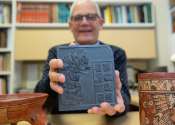
For sports fans, places like Fenway Park, Wembley Stadium or Wimbledon's Centre Court are practically hallowed ground.
Archaeology
10 hours ago
0
70

Inside the cell nucleus, the DNA molecule is found in a densely packed DNA-protein complex known as chromatin. Here the DNA is wrapped around a core of histone proteins and densely packed to form nucleosomes. The structure ...
Cell & Microbiology
Apr 26, 2024
0
59

Molecular computer components could represent a new IT revolution and help us create cheaper, faster, smaller, and more powerful computers. Yet researchers struggle to find ways to assemble them more reliably and efficiently.
Nanomaterials
Apr 24, 2024
0
18
Scientists at the Leibniz Institute of Plant Biochemistry (IPB) have succeeded for the first time in stably and precisely inserting large gene segments into the DNA of higher plants very efficiently. To do this, they optimized ...
Plants & Animals
Apr 24, 2024
0
148

A new paper published today (April 24) in the journal Nature by an international team of 279 scientists led by the Royal Botanic Gardens, Kew presents the most up-to-date understanding of the flowering plant tree of life.
Plants & Animals
Apr 24, 2024
0
130

People say "When pigs fly" to describe the impossible. But even if most mammals are landlubbers, the ability to glide or fly has evolved again and again during mammalian evolution, in species ranging from bats to flying squirrels. ...
Evolution
Apr 24, 2024
0
1

In a finding with implications for the search for extraterrestrial life, researchers have discovered microbial life 13 feet below Earth's most inhospitable desert. The research is published in the journal PNAS Nexus.
Ecology
Apr 24, 2024
1
75

A team of researchers at IOCB Prague led by Prof. Michal Hocek has developed a novel method for preparing ribonucleic acid (RNA) containing modified bases. Innovative use of engineered DNA polymerases, enzymes commonly used ...
Biotechnology
Apr 23, 2024
0
14

Scientists at UC Santa Cruz have discovered a cellular process in the breast that can increase milk production by pregnant women, revealing a potential path to addressing lactation insufficiency syndrome—the inability of ...
Cell & Microbiology
Apr 23, 2024
0
35

Dysregulated R-loops can cause stalled replication forks and telomere instability. However, how R-loops are recognized and regulated, is still not well understood, particularly at telomeres.
Cell & Microbiology
Apr 22, 2024
0
19
Deoxyribonucleic acid (DNA) is a nucleic acid that contains the genetic instructions used in the development and functioning of all known living organisms and some viruses. The main role of DNA molecules is the long-term storage of information. DNA is often compared to a set of blueprints or a recipe, or a code, since it contains the instructions needed to construct other components of cells, such as proteins and RNA molecules. The DNA segments that carry this genetic information are called genes, but other DNA sequences have structural purposes, or are involved in regulating the use of this genetic information.
Chemically, DNA consists of two long polymers of simple units called nucleotides, with backbones made of sugars and phosphate groups joined by ester bonds. These two strands run in opposite directions to each other and are therefore anti-parallel. Attached to each sugar is one of four types of molecules called bases. It is the sequence of these four bases along the backbone that encodes information. This information is read using the genetic code, which specifies the sequence of the amino acids within proteins. The code is read by copying stretches of DNA into the related nucleic acid RNA, in a process called transcription.
Within cells, DNA is organized into X-shaped structures called chromosomes. These chromosomes are duplicated before cells divide, in a process called DNA replication. Eukaryotic organisms (animals, plants, fungi, and protists) store most of their DNA inside the cell nucleus and some of their DNA in the mitochondria (animals and plants) and chloroplasts (plants only). Prokaryotes (bacteria and archaea) however, store their DNA in the cell's cytoplasm. Within the chromosomes, chromatin proteins such as histones compact and organize DNA. These compact structures guide the interactions between DNA and other proteins, helping control which parts of the DNA are transcribed.
This text uses material from Wikipedia, licensed under CC BY-SA
