Dog attacks on mountain tapirs highlight a growing threat to endangered wildlife
Researchers who captured footage of dog attacks on endangered mountain tapirs in Colombia are calling for action to protect threatened wildlife.

Researchers who captured footage of dog attacks on endangered mountain tapirs in Colombia are calling for action to protect threatened wildlife.
Plants & Animals
Apr 17, 2024
0
1
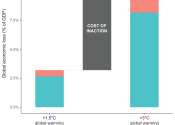
Traditionally, estimates of how climate change will affect global economies have focused on the effects of annual temperature changes. However, the additional impacts of variability and extremes in rainfall and temperature ...
Environment
Apr 17, 2024
1
31

A new study conducted by Tulane University's Newcomb Institute has uncovered the staggering economic toll of intimate partner violence experienced by women in Louisiana.
Social Sciences
Apr 16, 2024
0
1

About 1 in every 3 women, and 1 in 4 men, will experience domestic violence over their lifetime. Since domestic violence can escalate to the point of serious injury or murder, survivors must take action to increase their ...
Social Sciences
Apr 11, 2024
0
5

A country's economic prosperity is linked with improved well-being in its residents, according to a study published in PLOS ONE by Feng Huang from the Chinese Academy of Sciences, and colleagues.
Social Sciences
Apr 10, 2024
0
1

Home-schooling and caring for children during the COVID-19 school and daycare closures left many working mothers physically and mentally exhausted and with little or no time to switch off, a new study shows.
Social Sciences
Apr 9, 2024
1
1

The Gambia's ban on female genital mutilation (FGM) since 2015 is under threat. Proposed changes before parliament could permit medicalized female genital cutting and allow it for consenting adults.
Social Sciences
Mar 31, 2024
0
43

Archaeologist Xinyi Liu at Washington University in St. Louis teamed up with Martin Jones of the University of Cambridge to write a new paper for the Proceedings of the National Academy of Sciences that explains how recent ...
Archaeology
Mar 29, 2024
0
52

If you're wondering who holds the title of domestic cat royalty, look no further than the stunning Bengal breed. They take the prize for the most popular breed in The International Cat Association (TICA) registry due to their ...
Plants & Animals
Mar 25, 2024
0
491

Humans pass on more viruses to domestic and wild animals than we catch from them, according to a major new analysis of viral genomes by UCL researchers.
Ecology
Mar 25, 2024
0
253
Domestication (from Latin domesticus) or taming refers to the process whereby a population of animals or plants, through a process of selection, becomes accustomed to human provision and control. A defining characteristic of domestication is artificial selection by humans. Some species such as the Asian Elephant, numerous members of which which have for many centuries been used as working animals, are not domesticated because they have not normally been bred under human control, even though they have been commonly tamed. Humans have brought these populations under their care for a wide range of reasons: to produce food or valuable commodities (such as wool, cotton, or silk), for help with various types of work (such as transportation or protection), for protection of themselves and livestock, to enjoy as companions or ornamental plant, and for scientific research, such as finding cures for certain diseases.
Plants domesticated primarily for aesthetic enjoyment in and around the home are usually called house plants or ornamentals, while those domesticated for large-scale food production are generally called crops. A distinction can be made between those domesticated plants that have been deliberately altered or selected for special desirable characteristics (see cultigen) and those domesticated plants that are essentially no different from their wild counterparts (assuming domestication does not necessarily imply physical modification). Likewise, animals domesticated for home companionship are usually called pets while those domesticated for food or work are called livestock or farm animals.
This text uses material from Wikipedia, licensed under CC BY-SA
