Researchers uncover details of how bacteria build protective barriers, may inform new antibiotics
Yale researchers have uncovered new details on how bacteria like E. coli build their protective barriers, which will inform new antibiotic development.

Yale researchers have uncovered new details on how bacteria like E. coli build their protective barriers, which will inform new antibiotic development.
Cell & Microbiology
Apr 22, 2024
0
16

A team at the University of Tokyo have constructed an improved mid-infrared microscope, enabling them to see the structures inside living bacteria at the nanometer scale. Mid-infrared microscopy is typically limited by its ...
Optics & Photonics
Apr 17, 2024
0
72

Since the 1970s, modern antibiotic discovery has been experiencing a lull. Now the World Health Organization has declared the antimicrobial resistance crisis as one of the top 10 global public health threats.
Cell & Microbiology
Apr 8, 2024
0
48

Hydrogels are popular for use in skin ailments and tissue engineering. These polymer-based biocompatible materials are useful for their abilities to retain water, deliver drugs into wounds, and biodegrade. However, they are ...
Biochemistry
Apr 2, 2024
0
55
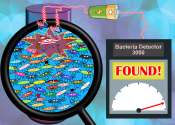
Researchers at Goethe University Frankfurt and Kiel University have developed a novel sensor for the detection of bacteria. It is based on a chip with an innovative surface coating that ensures only very specific microorganisms ...
Biochemistry
Mar 25, 2024
0
27

Heat shock proteins (HSPs) are the chaperones of cellular stress response because they help guide the folding and unfolding of other proteins.
Molecular & Computational biology
Mar 21, 2024
0
1

The bacterium behind tuberculosis is a wily foe, adept at bobbing and weaving around the immune system and antibiotics alike. Mycobacterium tuberculosis (Mtb) has been notoriously difficult to eradicate, often dormant in ...
Cell & Microbiology
Mar 20, 2024
0
1

Galantamine is a common medication used by people with Alzheimer's disease and other forms of dementia around the world to treat their symptoms. Unfortunately, synthesizing the active compounds in a lab at the scale needed ...
Biotechnology
Mar 14, 2024
0
32

E. coli bacteria and an electronic device might seem to have little in common, but in a recent experiment, University of Maryland researchers linked them into the first closed-loop system able to communicate across the technological–biological ...
Cell & Microbiology
Mar 5, 2024
0
1

What's in a name? A lot, actually. For the scientific community, names and labels help organize the world's organisms so they can be identified, studied, and regulated. But for bacteria, there has never been a reliable method ...
Ecology
Mar 4, 2024
0
50
Escherichia coli (commonly E. coli; pronounced /ˌɛʃɪˈrɪkiə ˈkoʊlaɪ/, /iː ~/, and named for its discoverer), is a Gram negative bacterium that is commonly found in the lower intestine of warm-blooded organisms (endotherms). Most E. coli strains are harmless, but some, such as serotype O157:H7, can cause serious food poisoning in humans, and are occasionally responsible for costly product recalls. The harmless strains are part of the normal flora of the gut, and can benefit their hosts by producing vitamin K2, or by preventing the establishment of pathogenic bacteria within the intestine.
E. coli are not always confined to the intestine, and their ability to survive for brief periods outside the body makes them an ideal indicator organism to test environmental samples for fecal contamination. The bacteria can also be grown easily and its genetics are comparatively simple and easily-manipulated or duplicated through a process of metagenics, making it one of the best-studied prokaryotic model organisms, and an important species in biotechnology and microbiology.
E. coli was discovered by German pediatrician and bacteriologist Theodor Escherich in 1885, and is now classified as part of the Enterobacteriaceae family of gamma-proteobacteria.
This text uses material from Wikipedia, licensed under CC BY-SA
