Related topics: vaccine , hiv , aids


HIV

hide

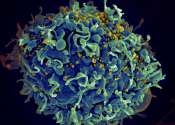
Human immunodeficiency virus (HIV) is a lentivirus (a member of the retrovirus family) that causes acquired immunodeficiency syndrome (AIDS), a condition in humans in which the immune system begins to fail, leading to life-threatening opportunistic infections. Infection with HIV occurs by the transfer of blood, semen, vaginal fluid, pre-ejaculate, or breast milk. Within these bodily fluids, HIV is present as both free virus particles and virus within infected immune cells. The four major routes of transmission are unsafe sex, contaminated needles, breast milk, and transmission from an infected mother to her baby at birth (Vertical transmission). Screening of blood products for HIV has largely eliminated transmission through blood transfusions or infected blood products in the developed world.

HIV infection in humans is now pandemic. From 1981 to 2006, AIDS killed more than 25 million people. HIV infects about 0.6 percent of the world's population. In 2005 alone, AIDS claimed an estimated 2.4–3.3 million lives, of which more than 570,000 were children. A third of these deaths are occurring in sub-Saharan Africa, retarding economic growth and increasing poverty. According to current estimates, HIV is set to infect 90 million people in Africa, resulting in a minimum estimate of 18 million orphans. Antiretroviral treatment reduces both the mortality and the morbidity of HIV infection, but routine access to antiretroviral medication is not available in all countries.

HIV primarily infects vital cells in the human immune system such as helper T cells (specifically CD4+ T cells), macrophages, and dendritic cells. HIV infection leads to low levels of CD4+ T cells through three main mechanisms: firstly, direct viral killing of infected cells; secondly, increased rates of apoptosis in infected cells; and thirdly, killing of infected CD4+ T cells by CD8 cytotoxic lymphocytes that recognize infected cells. When CD4+ T cell numbers decline below a critical level, cell-mediated immunity is lost, and the body becomes progressively more susceptible to opportunistic infections.

Eventually most HIV-infected individuals develop AIDS. These individuals mostly die from opportunistic infections or malignancies associated with the progressive failure of the immune system. Without treatment, about 9 out of every 10 persons with HIV will progress to AIDS after 10–15 years. Many progress much sooner. Treatment with anti-retrovirals increases the life expectancy of people infected with HIV. Even after HIV has progressed to diagnosable AIDS, the average survival time with antiretroviral therapy (as of 2005) is estimated to be more than 5 years. Without antiretroviral therapy, death normally occurs within a year.

For more information about HIV, read the full article at Wikipedia.
This text uses material from Wikipedia and is available under the GNU Free Documentation License.


News tagged with hiv infection

results timeline


UNL research aims to understand homelessness among women

Other Sciences / Social Sciences

created Dec 23, 2009 | popularity 5 / 5 (2) | comments 0

(PhysOrg.com) -- Women make up nearly one-third of the homeless population in the United States. Yet little is known about how they become homeless or how they live. University of Nebraska-Lincoln sociologist Les Whitbeck ...


New study measures HIV anti-retroviral regimens' safety and efficacy

New study measures HIV anti-retroviral regimens' safety and efficacy

Medicine & Health / HIV & AIDS

created Dec 01, 2009 | popularity not rated yet | comments 0

A study in the New England Journal of Medicine released on World AIDS Day reports that viral failure, the point at which medication can no longer suppress the HIV infection, was twice as likely and happen ...


A reductionist approach to HIV research

Medicine & Health / HIV & AIDS

created Nov 30, 2009 | popularity not rated yet | comments 0

A major obstacle to HIV research is the virus's exquisite specialisation for its human host - meaning that scientists' traditional tools, like the humble lab mouse, can deliver only limited information. Now, a team of researchers ...


UNAIDS: Sex main cause for HIV spreading in China (AP)

UNAIDS: Sex main cause for HIV spreading in China

Medicine & Health / HIV & AIDS

created Nov 25, 2009 | popularity not rated yet | comments 0

(AP) -- The virus that causes AIDS is now spreading fastest in China through heterosexual sex, a trend demanding new strategies to stave off a rebound in the epidemic after years of progress in containing ...


UN: HIV outbreak peaked in 1996

Medicine & Health / HIV & AIDS

created Nov 24, 2009 | popularity not rated yet | comments 1

(AP) -- The number of people worldwide infected with the virus that causes AIDS - about 33 million - has remained virtually unchanged for the last two years, United Nations experts said Tuesday.


Why circumcision reduces HIV risk

Medicine & Health / HIV & AIDS

created Nov 24, 2009 | popularity 4 / 5 (1) | comments 2

The decreased risk of HIV infection in circumcised men cannot be explained by a reduction in sores from conditions such as herpes, according to research published in PLoS Medicine.


Shape of things to come: Structure of HIV coat could lead to new drugs

Medicine & Health / HIV & AIDS

created Nov 12, 2009 | popularity not rated yet | comments 0

Structural biologists at the University of Pittsburgh School of Medicine have described the architecture of the complex of protein units that make up the coat surrounding the HIV genome and identified in it a "seam" of functional ...


Scientists explain binding action of 2 key HIV antibodies; could lead to new vaccine design

Medicine & Health / Research

created Nov 09, 2009 | popularity not rated yet | comments 0

A very close and detailed study of how the most robust antibodies work to block the HIV virus as it seeks entry into healthy cells has revealed a new direction for researchers hoping to design an effective vaccine.


AIDS experts say Russia needs new HIV strategy

Medicine & Health / HIV & AIDS

created Oct 28, 2009 | popularity not rated yet | comments 0

(AP) -- AIDS experts urged Russian officials on Wednesday to scrap their abstinence-based strategy for curbing the spread of HIV, saying the country's fast-growing epidemic could be entering a dangerous new phase.


AIDS: Are the wilderness years over for vaccine research?

Medicine & Health / HIV & AIDS

created Oct 21, 2009 | popularity 5 / 5 (1) | comments 0

Scientists looking for a vaccine against the AIDS virus can be forgiven for wondering at times whether they made the right career decision.


Full results show AIDS vaccine is of modest help

Medicine & Health / HIV & AIDS

created Oct 20, 2009 | popularity not rated yet | comments 0

(AP) -- Fresh results from the world's first successful test of an experimental AIDS vaccine confirm that it is only marginally effective and suggest that its protection against HIV infection may wane over time.


AIDS: Vaccine shows positive results in small trial - researchers

Medicine & Health / HIV & AIDS

created Oct 19, 2009 | popularity 5 / 5 (1) | comments 0

An HIV vaccine tested in Tanzania has shown positive results in preliminary trials and may provide better protection than a promising Thai vaccine unveiled on September 24, Swedish researchers said Monday.


Continuing racial differences in HIV prevalence in US

Medicine & Health / HIV & AIDS

created Oct 06, 2009 | popularity 3.5 / 5 (2) | comments 0

HIV prevalence among African Americans is ten times greater than the prevalence among whites. This racial disparity in HIV prevalence has persisted in the face of both governmental and private actions, involving many billions ...


Volunteers key to success of Thai vaccine trials (AP)

Volunteers key to success of Thai vaccine trials

Medicine & Health / HIV & AIDS

created Sep 28, 2009 | popularity not rated yet | comments 0

(AP) -- Nearly 16,000 Thais ignored the false rumors that they were being infected by the AIDS virus, and overcame their fears of becoming social outcasts to participate in the first HIV vaccine trials to ...


The difficult Way to HIV Vaccine

Medicine & Health / HIV & AIDS

created Sep 16, 2009 | popularity not rated yet | comments 0

T cells are key players in the immune response to HIV, which are able to delete infected cells. This capacity is used for vaccine development against HIV. “To date however, success of this strategy remains elusive. Our understanding ...