Protein structure

hide

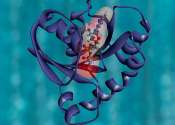
Proteins are an important class of biological macromolecules present in all biological organisms, made up of such elements as carbon, hydrogen, nitrogen, oxygen, and sulphur. All proteins are polymers of amino acids. The polymers, also known as polypeptides, consist of a sequence of 20 different L-α-amino acids, also referred to as residues. For chains under 40 residues the term peptide is frequently used instead of protein. To be able to perform their biological function, proteins fold into one, or more, specific spatial conformations, driven by a number of noncovalent interactions such as hydrogen bonding, ionic interactions, Van Der Waals forces and hydrophobic packing. In order to understand the functions of proteins at a molecular level, it is often necessary to determine the three dimensional structure of proteins. This is the topic of the scientific field of structural biology, that employs techniques such as X-ray crystallography or NMR spectroscopy, to determine the structure of proteins.

A number of residues are necessary to perform a particular biochemical function, and around 40-50 residues appears to be the lower limit for a functional domain size. Protein sizes range from this lower limit to several thousand residues in multi-functional or structural proteins. However, the current estimate for the average protein length is around 300 residues. Very large aggregates can be formed from protein subunits, for example many thousand actin molecules assemble into a microfilament.

For more information about Protein structure, read the full article at Wikipedia.
This text uses material from Wikipedia and is available under the GNU Free Documentation License.


News tagged with protein structure

results timeline


Designer molecule detects tiny amounts of cyanide, then glows

Designer molecule detects tiny amounts of cyanide, then glows

Chemistry / Materials Science

created Oct 21, 2009 | popularity 4 / 5 (3) | comments 0

(PhysOrg.com) -- A small molecule designed to detect cyanide in water samples works quickly, is easy to use, and glows under ultraviolet or "black" light. Although the fluorescent molecule is not yet ready ...


Dysfunctional protein dynamics behind neurological disease?

Medicine & Health / Neuroscience

created Oct 13, 2009 | popularity not rated yet | comments 0

Researchers at Lund University, Sweden, have taken a snapshot of proteins changing shape, sticking together and creating structures that are believed to trigger deadly processes in the nervous system. The discovery opens ...


How the 100th protein structure solved at Diamond impacts our understanding of how insects smell

How the 100th protein structure solved at Diamond impacts our understanding of how insects smell

Biology / Cell & Microbiology

created Sep 29, 2009 | popularity 5 / 5 (1) | comments 0

New research announced today, Wednesday 30th September, by a team of leading scientists working with the UK's national Synchrotron, Diamond Light Source, could have a significant impact on the development ...


Building a complete metabolic model

Biology / Cell & Microbiology

created Sep 17, 2009 | popularity 5 / 5 (3) | comments 0

Investigators at Burnham Institute for Medical Research, University of California, San Diego, The Scripps Research Institute, Genomics Institute of the Novartis Research Foundation and other institutions have constructed ...


Landmark study sheds new light on human chromosomal birth defects

Landmark study sheds new light on human chromosomal birth defects

Biology / Cell & Microbiology

created Sep 16, 2009 | popularity 4.8 / 5 (4) | comments 0

Using yeast genetics and a novel scheme to selectively remove a single protein from the cell division process called meiosis, a cell biologist at The Florida State University found that when a key molecular ...


Disordered proteins sensitive to environment, sequence changes

Disordered proteins sensitive to environment, sequence changes

Biology / Other

created Sep 14, 2009 | popularity not rated yet | comments 0

(PhysOrg.com) -- Research published by a team of Indiana University bioinformaticists has shown quantitatively the influence of small sequence changes and environmental conditions on the disordered regions ...


Chemists create protein structure database

Chemistry / Other

created Sep 09, 2009 | popularity not rated yet | comments 0

(PhysOrg.com) -- Any chemist with access to the Internet can now use a powerful tool to help them accurately identify the structure of a protein, thanks to recently published work led by Harold A. Scheraga, Cornell's Todd ...


A Cell’s Private Life: Researchers Peer Inside a Hidden Protein

A Cell's Private Life: Researchers Peer Inside a Hidden Protein

Medicine & Health / Research

created Aug 30, 2009 | popularity 4.3 / 5 (3) | comments 2

(PhysOrg.com) -- To understand the molecular machinery of the human body, scientists have to be able to observe the structure of cellular proteins. This has been particularly challenging for those proteins ...


Research reveals how cells tell time

Medicine & Health / Research

created Jun 08, 2009 | popularity 5 / 5 (1) | comments 0

The fuzzy pale mold that lines the glass tubes in Dr. Yi Liu's lab doesn't look much like a clock. But this fungus has an internal, cell-based timekeeper nearly as sophisticated as a human's, allowing UT Southwestern Medical ...


Determining success or failure in cholesterol-controlling drugs

Medicine & Health / Research

created May 15, 2009 | popularity 1 / 5 (1) | comments 0

Researchers at the University of California, San Diego have discovered that a complex network of interactions between drugs and the proteins with which they bind can explain adverse drug effects. Their findings suggest that ...


Chameleon-like camouflage: 'Nano-camo' for fashionistas and environmentalists

Chameleon-like camouflage: 'Nano-camo' for fashionistas and environmentalists

Nanotechnology / Nanomaterials

created Apr 17, 2009 | popularity 4 / 5 (10) | comments 1

(PhysOrg.com) -- Certain fish species blend with their environment by changing color. Sandia National Laboratories researchers have demonstrated that, in theory, they could cause synthetic materials to change ...


Unfolding 'nature's origami'

Biology / Cell & Microbiology

created Mar 02, 2009 | popularity 4 / 5 (2) | comments 0

Sometimes known as "nature's origami", the way that proteins fold is vital to ensuring they function correctly. But researchers at the University of Leeds have discovered this is a 'hit and miss' process, with proteins potentially ...


In race to predict protein structure, computers take lead

Technology / Computer Sciences

created Jan 15, 2009 | popularity 5 / 5 (1) | comments 0

A flood of data is emerging from genome research, including sequence data on proteins. To help science keep pace with this flow of knowledge, computer scientists, biophysicists and biochemists across the world have been developing ...


Protein 'tubules' free avian flu virus from immune recognition

Biology /

created Nov 05, 2008 | popularity 4.5 / 5 (4) | comments 0

A protein found in the virulent avian influenza virus strain called H5N1 forms tiny tubules in which it "hides" the pieces of double-stranded RNA formed during viral infection, which otherwise would prompt an antiviral immune ...


Improved technique determines structure in membrane proteins

Chemistry /

created Aug 17, 2008 | popularity 3.7 / 5 (3) | comments 0

Understanding the form and function of certain proteins in the human body is becoming faster and easier, thanks to the work of researchers at the University of Illinois.


  • Pages: 1