News tagged with rice
New study sheds light on genetics of rice metabolism
A large-scale study analyzing metabolic compounds in rice grains conducted by researchers at the RIKEN Plant Science Center (PSC) and their collaborators has identified 131 rice metabolites and clarified the ...
Feb 08, 2012 |
not rated yet |
0
School lunches to have more veggies, whole grains
(AP) -- The first major nutritional overhaul of school meals in more than 15 years means most offerings - including the always popular pizza - will come with less sodium, more whole grains and a wider selection ...
Jan 25, 2012 |
not rated yet |
0
Cut back on soot, methane to slow warming: study
There are simple, inexpensive ways to cut back on two major pollutants -- soot and methane -- and taking action now could slow climate change for years to come, international scientists said Thursday.
Jan 12, 2012 |
2.9 / 5 (7) |
6
Grain crops with lower carotene levels are less affected by parasitic plants
Grain crops that produce less carotene can produce more food, especially in Africa, as they are less affected by parasitic plants. This is the result of research with which Muhammad Jamil hopes to obtain his ...
Jan 12, 2012 |
5 / 5 (1) |
1
|
Stop abusing insecticides in rice
To prevent devastating insect pest outbreaks in rice that cause millions of dollars of damage, the International Rice Research Institute (IRRI) has called for a ban on certain insecticides in rice production as part of its ...
Jan 05, 2012 |
not rated yet |
0
Scientists find genes to tackle climate change in outback rice
(PhysOrg.com) -- University of Queensland scientists have discovered that an ancient relative of rice contains genes that could potentially save food crops from the devastating effects of global warming.
Dec 19, 2011 |
4 / 5 (1) |
1
|
Rice Institute calls for cuts in pesticide use
Rice farmers should cut the use of pesticides that kill the natural predators of the planthopper, one of the most destructive pests of the key crop, the International Rice Research Institute (IRRI) has said.
Dec 16, 2011 |
not rated yet |
0
Growstones ideal alternative to perlite, parboiled rice hulls
In the greenhouse business, organic and inorganic growing substrates are chosen for the physical and chemical properties necessary to support specific crops and growing conditions. One important physical property in substrates ...
Dec 14, 2011 |
not rated yet |
0
Tiny protein helps bacteria 'talk' and triggers defensive response in plants
Scientists have discovered a new signal that helps invading bacteria communicate but also helps targeted rice plants coordinate defensive attacks on the disease-causing invaders, a finding that could lead to new methods of ...
Dec 12, 2011 |
3 / 5 (2) |
0
|
Resequencing 50 accessions of rice cast new light on molecular breeding
BGI, the world's largest genomics organization, announced that a study on resequencing 50 accessions of cultivated and wild rice was published online today in Nature Biotechnology. The study provides one of the largest genome ...
Dec 11, 2011 |
2 / 5 (1) |
0
Rice as a source of arsenic exposure
A study just published by a Dartmouth team of scientists in the Proceedings of the National Academy of Sciences (PNAS) advances our understanding of the sources of human exposure to arsenic and focuses atten ...
Dec 05, 2011 |
4.5 / 5 (2) |
1
|
Green: The new color of rice
Rice consumers worldwide can now look forward to eating "green" rice with the launch of an initiative that will set environmentally sustainable and socially responsible rice production management standards.
Dec 02, 2011 |
3 / 5 (1) |
0
High fiber diet linked to reduced risk of colorectal cancer
Eating a diet high in fibre, particularly from cereal and whole grains, is associated with a reduced risk of colorectal cancer, finds a new study integrating all available evidence published in the British Medical Journal ...
Nov 11, 2011 |
5 / 5 (1) |
0
Scientists make human blood protein from rice
Scientists at a Chinese university said Monday they can use rice to make albumin, a protein found in human blood that is often used for treating burns, traumatic shock and liver disease.
Oct 31, 2011 |
4.6 / 5 (7) |
0
New rice varieties offer benefits to growers
New rice varieties that offer new options for U.S. growers and expanded market opportunities for the U.S. rice industry have been developed by U.S. Department of Agriculture (USDA) scientists and cooperators.
Oct 31, 2011 |
not rated yet |
0
Rice
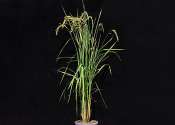
Rice is the seed of the monocot plant Oryza sativa, of the grass family (Poaceae). As a cereal grain, it is the most important staple food for a large part of the world's human population, especially in tropical Latin America, the West Indies, East, South and Southeast Asia. It is the grain with the second highest worldwide production, after maize ("corn").. Since a large portion of maize crops are grown for purposes other than human consumption, rice is probably the most important grain with regards to human nutrition and caloric intake, providing more than one fifth of the calories consumed worldwide by the human species. A traditional food plant in Africa, rice has the potential to improve nutrition, boost food security, foster rural development and support sustainable landcare. In early 2008, some governments and retailers began rationing supplies of the grain due to fears of a global rice shortage.
The name wild rice is usually used for species of the grass genus Zizania, both wild and domesticated, although the term may also be used for primitive or uncultivated varieties of Oryza.
Rice is normally grown as an annual plant, although in tropical areas it can survive as a perennial and can produce a ratoon crop for up to 20 years. The rice plant can grow to 1–1.8 m tall, occasionally more depending on the variety and soil fertility. The grass has long, slender leaves 50–100 cm long and 2–2.5 cm broad. The small wind-pollinated flowers are produced in a branched arching to pendulous inflorescence 30–50 cm long. The edible seed is a grain (caryopsis) 5–12 mm long and 2–3 mm thick.
Rice cultivation is well-suited to countries and regions with low labor costs and high rainfall, as it is very labor-intensive to cultivate and requires plenty of water for cultivation. Rice can be grown practically anywhere, even on a steep hill or mountain. Although its parent species are native to South Asia and certain parts of Africa, centuries of trade and exportation have made it commonplace in many cultures worldwide.
The traditional method for cultivating rice is flooding the fields while, or after, setting the young seedlings. This simple method requires sound planning and servicing of the water damming and channeling, but reduces the growth of less robust weed and pest plants that have no submerged growth state, and deters vermin. While with rice growing and cultivation the flooding is not mandatory, all other methods of irrigation require higher effort in weed and pest control during growth periods and a different approach for fertilizing the soil.
For more information about Rice, read the full article at
Wikipedia.
This text uses material from Wikipedia and is available under the GNU Free Documentation License.