NASA hears from Voyager 1, the most distant spacecraft from Earth, after months of quiet
NASA has finally heard back from Voyager 1 again in a way that makes sense.

NASA has finally heard back from Voyager 1 again in a way that makes sense.
Planetary Sciences
1 hour ago
0
0
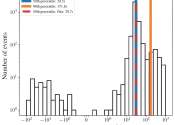
Researchers at the University of Minnesota Twin Cities College of Science and Engineering co-led a new study by an international team that will improve the detection of gravitational waves—ripples in space and time.
Astronomy
19 hours ago
0
86
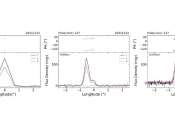
Using the Five-hundred-meter Aperture Spherical radio Telescope (FAST), Chinese astronomers have investigated radio emission from a rotating radio transient known as RRAT J1854+0306. Results of the study, published April ...

New movies of two of the most famous objects in the sky—the Crab Nebula and Cassiopeia A—are being released from NASA's Chandra X-ray Observatory. Each includes X-ray data collected by Chandra over about two decades. ...
Astronomy
Apr 24, 2024
0
79

While ESA's satellite INTEGRAL was observing the sky, it spotted a burst of gamma-rays—high-energy photons—coming from the nearby galaxy M82. Only a few hours later, ESA's XMM-Newton X-ray space telescope searched for ...
Astronomy
Apr 24, 2024
0
84
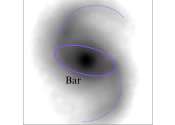
The universe's early galaxies were less chaotic and developed much faster than previously thought, according to new research looking back more than ten billion years in time. An international team of astronomers led by Durham ...
Astronomy
Apr 23, 2024
0
61

Earth's atmosphere maintains a constant level of oxygen, whether it is a wintry, rainy day or hot summer. Across the ocean, oxygen concentrations vary enormously between different places and over time. Sometimes oxygen levels ...
Environment
Apr 23, 2024
0
9

The search for extrasolar planets is currently undergoing a seismic shift. With the deployment of the Kepler Space Telescope and the Transiting Exoplanet Survey Satellite (TESS), scientists discovered thousands of exoplanets, ...
Astrobiology
Apr 23, 2024
0
18

Turbulence is ubiquitous in nature. It exists everywhere, from our daily lives to the distant universe, while being labeled as "the last great unsolved problem of classical physics" by Richard Feynman. Prof. Dr. Huirong Yan ...
Astronomy
Apr 23, 2024
0
544

New research published in Nature showcases new observations from the James Webb Space Telescope (JWST) that suggest black holes rapidly shut off star-formation in massive galaxies by explosively removing large amounts of ...
Astronomy
Apr 23, 2024
0
372
A starship is a theoretical spacecraft designed for traveling between the stars, as opposed to a vehicle designed for orbital spaceflight or interplanetary travel.
The term is mostly found in science fiction, as humanity has not yet constructed such vehicles (while the Voyager and Pioneer probes have traveled into local interstellar space, they are not generally considered starships, mainly because they are both unpowered and unmanned). However, exploratory engineering has been undertaken on several preliminary designs and feasibility studies for starships that could be built with modern technology or technology thought likely to be available in the near future. For examples of such studies, see Project Daedalus, Project Orion, and Project Longshot.
This text uses material from Wikipedia, licensed under CC BY-SA
