News tagged with telescope
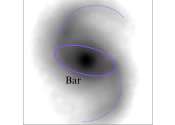
The turbulent birth of super star clusters in galaxy mergers
By combining two of the most advanced telescopes in the world -- the new Atacama Large Millimeter Array (ALMA) and the Very Large Telescope (VLT) of ESO -- a team of French astronomers from the Institut d'astrophysique ...
Feb 10, 2012 |
5 / 5 (3) |
0
Astronomy team discovers nearby dwarf galaxy
(PhysOrg.com) -- A team led by UCLA research astronomer Michael Rich has used a unique telescope to discover a previously unknown companion to the nearby galaxy NGC 4449, which is some 12.5 million light years ...
Feb 08, 2012 |
4.3 / 5 (8) |
5
|
NASA's Galaxy Evolution explorer in standby mode
(PhysOrg.com) -- NASA's Galaxy Evolution Explorer, or Galex, was placed in standby mode today as engineers prepare to end mission operations, nearly nine years after the telescope's launch. The spacecraft ...
Space & Earth / Space Exploration
Feb 08, 2012 |
4 / 5 (3) |
1
Space Image: Large X-class flare erupts on the Sun
On Jan. 27, 2012, a large X-class flare erupted from an active region near the solar west limb. X-class flares are the most powerful of all solar events.
Space & Earth / Space Exploration
Feb 08, 2012 |
not rated yet |
0
ESO team succeeds in linking telescopes at Paranal Observatory into giant VLT
(PhysOrg.com) -- Researchers working as part of the European Southern Observatory (ESO) at the Cerra Paranal Mountain Observatory in the Atacama Desert in Chile, have succeeded in virtually connecting all ...
Do black holes help stars form?
(PhysOrg.com) -- The center of just about every galaxy is thought to host a black hole, some with masses of thousands of millions of Suns and consequently strong gravitational pulls that disrupt material around ...
Feb 03, 2012 |
4.5 / 5 (6) |
1
|
Classic portrait of a barred spiral galaxy
(PhysOrg.com) -- The NASA/ESA Hubble Space Telescope has taken a picture of the barred spiral galaxy NGC 1073, which is found in the constellation of Cetus (The Sea Monster). Our own galaxy, the Milky Way, ...
Feb 03, 2012 |
4.7 / 5 (7) |
3
|
Hubble zooms in on a magnified galaxy
(PhysOrg.com) -- Thanks to the presence of a natural "zoom lens" in space, NASA's Hubble Space Telescope got a uniquely close-up look at the brightest "magnified" galaxy yet discovered.
Feb 02, 2012 |
5 / 5 (13) |
11
|
2012 BX34: Behind the scenes in the discovery of a near Earth asteroid
Several blockbuster movies, television shows and commercials have depicted the discovery of an asteroid heading towards Earth and usually, somehow, impending doom is averted. But how do the discoveries of ...
Space & Earth / Space Exploration
Feb 02, 2012 |
5 / 5 (2) |
0
Russia will begin hunt for extrasolar planets
Located just south of Saint Petersburg on Pulkovo Heights, one of the greatest Russian Observatories of all times the Pulkovo Observatory is about to embark on a very noble study. According to ...
Space & Earth / Space Exploration
Feb 02, 2012 |
5 / 5 (2) |
0
Remnant of an explosion with a powerful kick?
(PhysOrg.com) -- Vital clues about the devastating ends to the lives of massive stars can be found by studying the aftermath of their explosions. In its more than twelve years of science operations, NASA's ...
Feb 02, 2012 |
not rated yet |
1
|
Colorful solar instrument treks east for a new career
(PhysOrg.com) -- One of the world's most colorful solar instruments is moving across country for a new life dissecting the chemistry of comets and stars.
Space & Earth / Space Exploration
Feb 01, 2012 |
not rated yet |
0
Sun delivered curveball of powerful radiation at Earth
A potent follow-up solar flare, which occurred Friday (Jan. 17, 2012), just days after the Sun launched the biggest coronal mass ejection (CME) seen in nearly a decade, delivered a powerful radiation punch ...
Space & Earth / Space Exploration
Feb 01, 2012 |
4.5 / 5 (4) |
0
|
Study finds 'cool' gas may form and strengthen sunspots
Hydrogen molecules may act as a kind of energy sink that strengthens the magnetic grip that causes sunspots, according to scientists from Hawaii and New Mexico using a new infrared instrument on an old telescope.
Jan 31, 2012 |
5 / 5 (1) |
1
|
How well can astronomers study exoplanet atmospheres?
Exoplanet discoveries are happening at a frenetic pace, and some of the latest newly discovered worlds are sometimes described as Earth-Like and potentially habitable.
Jan 31, 2012 |
not rated yet |
0
Telescope
A telescope is an instrument designed for the observation of remote objects by the collection of electromagnetic radiation. The first known practically functioning telescopes were invented in the Netherlands at the beginning of the 17th century. "Telescopes" can refer to a whole range of instruments operating in most regions of the electromagnetic spectrum.
The word "telescope" (from the Greek tele = 'far' and skopein = 'to look or see'; teleskopos = 'far-seeing') was coined in 1611 by the Greek mathematician Giovanni Demisiani for one of Galileo Galilei's instruments presented at a banquet at the Accademia dei Lincei. In the Starry Messenger Galileo had used the term "perspicillum".
For more information about Telescope, read the full article at
Wikipedia.
This text uses material from Wikipedia and is available under the GNU Free Documentation License.