Mice navigating a virtual reality environment reveal that walls, not floors, define space
New research published in Current Biology sheds light on how animals create and maintain internal spatial maps based on their surroundings.
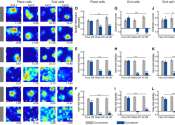
New research published in Current Biology sheds light on how animals create and maintain internal spatial maps based on their surroundings.
Plants & Animals
May 2, 2024
0
19

Political conservatives who watched a documentary on Syrian refugees with a virtual reality headset had far more sympathy for the people depicted in the film than those who viewed the same film on a two-dimensional computer ...
Political science
Apr 24, 2024
0
3

NASA astronauts are using virtual reality to explore Gateway. When they slip on their headsets, they're not just seeing the station—they're in it, meticulously surveying every detail and offering crucial insights on design ...
Space Exploration
Apr 10, 2024
0
5

Holographic displays offer a promising avenue for achieving lifelike 3D reproductions with continuous depth sensation, holding potential applications in fields such as entertainment, medical imaging, and virtual reality. ...
Optics & Photonics
Apr 8, 2024
0
43

Amid the rise in emergencies on college campuses, including fires, accidents, psychological issues, and cyber threats, there's an urgent need to enhance students' emergency response abilities. Existing research has explored ...
Social Sciences
Mar 25, 2024
0
2
Depicting worst-case climate scenarios like expanding deserts and dying coral reefs may better motivate people to support environmental policies when delivered via virtual reality, according to a research team led by Penn ...
Social Sciences
Mar 18, 2024
0
1

For centuries, people have found solace in walks through the forest and the practice of "forest bathing." Now, researchers at UBC are delving into the science behind this tradition to understand its benefits better and make ...
Ecology
Mar 13, 2024
0
1

It has long been established that changing an environment can reduce crime. For example, increased light in an area has the potential to discourage would-be offenders by making them more visible.
Social Sciences
Feb 8, 2024
0
18

Augmented reality (AR), virtual reality (VR) and mixed reality (MR) have expanded perceptual horizons and ushered in deeper human-digital interactions that transcend the confines of traditional flat panel displays.
Optics & Photonics
Feb 6, 2024
0
3

Holographic display technology provides an ultimate solution for real 3D display and has great potential in augmented reality and virtual reality. However, the color and viewing angle of holographic 3D display mainly depend ...
Optics & Photonics
Jan 24, 2024
0
28
Virtual reality (VR) is a technology which allows a user to interact with a computer-simulated environment, whether that environment is a simulation of the real world or an imaginary world. Most current virtual reality environments are primarily visual experiences, displayed either on a computer screen or through special or stereoscopic displays, but some simulations include additional sensory information, such as sound through speakers or headphones. Some advanced, haptic systems now include tactile information, generally known as force feedback, in medical and gaming applications. Users can interact with a virtual environment or a virtual artifact (VA) either through the use of standard input devices such as a keyboard and mouse, or through multimodal devices such as a wired glove, the Polhemus boom arm, and omnidirectional treadmill. The simulated environment can be similar to the real world, for example, simulations for pilot or combat training, or it can differ significantly from reality, as in VR games. In practice, it is currently very difficult to create a high-fidelity virtual reality experience, due largely to technical limitations on processing power, image resolution and communication bandwidth. However, those limitations are expected to eventually be overcome as processor, imaging and data communication technologies become more powerful and cost-effective over time.
Virtual Reality is often used to describe a wide variety of applications, commonly associated with its immersive, highly visual, 3D environments. The development of CAD software, graphics hardware acceleration, head mounted displays, database gloves and miniaturization have helped popularize the notion. In the book The Metaphysics of Virtual Reality, Michael Heim identifies seven different concepts of Virtual Reality: simulation, interaction, artificiality, immersion, telepresence, full-body immersion, and network communication. The definition still has a certain futuristic romanticism attached. People often identify VR with Head Mounted Displays and Data Suits.
This text uses material from Wikipedia, licensed under CC BY-SA
