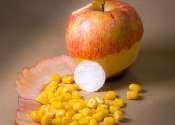
Vitamin C
hideVitamin C or L-ascorbic acid is an essential nutrient for humans, a large number of higher primate species, a small number of other mammalian species (notably guinea pigs and bats), a few species of birds, and some fish.
Ascorbate (an ion of ascorbic acid) is required for a range of essential metabolic reactions in all animals and plants. It is made internally by almost all organisms, humans being a notable exception. Deficiency in this vitamin causes scurvy in humans. It is also widely used as a food additive.
The pharmacophore of vitamin C is the ascorbate ion. In living organisms, ascorbate is an anti-oxidant, since it protects the body against oxidative stress, and is a cofactor in several vital enzymatic reactions.
Scurvy has been known since ancient times. People in many parts of the world assumed it was caused by a lack of fresh plant foods. The British Navy started giving sailors lime juice to prevent scurvy in 1795. Ascorbic acid was finally isolated by 1933 and synthesized in 1934. The uses and recommended daily intake of vitamin C are matters of on-going debate. A recent meta-analysis of 68 reliable antioxidant supplementation experiments involving a total of 232,606 individuals concluded that consuming additional ascorbate from supplements may not be as beneficial as thought.
For more information about Vitamin C, read the full article at
Wikipedia.
This text uses material from Wikipedia and is available under the GNU Free Documentation License.
News tagged with vitamin c
Autism treatment: Risky alternative therapies have little basis in science
Nov 24, 2009 |
3 / 5 (2) |
0
James Coman's son has an unusual skill. The 7-year-old, his father says, can swallow six pills at once. Diagnosed with autism as a toddler, the Chicago boy had been placed on an intense regimen of supplements and medications ...
Eating, drinking and lifestyle changes can boost immunity to ward off seasonal flu
Nov 05, 2009 |
4 / 5 (2) |
0
College students looking to stay healthy during flu and exam season need to focus on three very important factors, says a nutritionist at Washington University in St. Louis.
Fruit juices contain more vitamin C than their labels indicate
Oct 05, 2009 |
5 / 5 (2) |
0
A team of pharmacists from the University of Santiago de Compostela (USC) has established that the levels of vitamin C in many fruit juices and soft drinks are far higher than those indicated on their labels ...
Study Reveals New Role of Vitamin C in Skin Protection
Sep 09, 2009 |
4 / 5 (2) |
0
(PhysOrg.com) -- Scientists have uncovered a new role played by Vitamin C in protecting the skin.
Vitamin C deficiency impairs early brain development
Sep 02, 2009 |
5 / 5 (1) |
0
(PhysOrg.com) -- Faculty of Life Sciences at University of Copenhagen shows that vitamin C deficiency may impair the mental development of new-born babies.
Relatively low dietary intake of vitamins A and C boosts asthma risk
Apr 16, 2009 |
5 / 5 (1) |
0
(PhysOrg.com) -- A relatively low dietary intake of vitamins A and C boosts the risk of asthma, suggests a systematic analysis of the available evidence published ahead of print in the journal Thorax.
Housewife Remedy for Scurvy Preceded Medical Discovery
Mar 11, 2009 |
4.4 / 5 (7) |
3
(PhysOrg.com) -- A 100-page handwritten book by Mrs. Ebot Mitchell written in 1707 on household remedies contains among other things a recipe to treat scurvy. The recipe containing extracts from plants, orange ...
Vitamin C intake associated with lower risk of gout in men
Mar 09, 2009 |
4.8 / 5 (5) |
0
Men with higher vitamin C intake appear less likely to develop gout, a painful type of arthritis, according to a report in the March 9 issue of Archives of Internal Medicine.
Support for adjunctive vitamin C treatment in cancer
Mar 06, 2009 |
4.3 / 5 (6) |
3
Serious flaws in a recent study, which concluded that high doses of vitamin C reduce the effectiveness of chemotherapeutic drugs in the treatment of cancer, are revealed in the current issue of Alternative and Complementary Th ...
Diet key to blood pressure
Feb 06, 2009 |
4.5 / 5 (10) |
0
If you're like many Americans, your blood pressure has crept up as you've gotten older. But it doesn't have to. Our lifestyle has an impact on blood pressure; in fact, in parts of the world where people still live as their ...


